Thursday, September 8, 2016

Me and Civil Engineering: New to TI:GER

A funny series of events landed me as the first civil engineering PhD student in the TI:GER program, and I could not be happier with the way things have turned out. My name is Chloe Johansen, and I am a first year TI:GER PhD student studying the ways different civil infrastructure systems depend on each other and how to make these systems more resilient.


I believe imposter syndrome is prevalent among female engineers.. In short, it is a feeling that you somehow lucked into getting where you are. As a freshman, the fact that I wouldn’t be able to handle being an engineer was embedded in me, even though it is what I wanted to be.  I cycled through three different majors my first three years of college trying to figure out what else I could be good at and enjoy. I started as a pre-physical therapy major, realized that was not for me, changed to biology, realized that also was not for me, and tried out environmental science. Nope. Then finally, in my third year, I admitted to myself that I could handle an engineering course load after getting a rare A in physics. Also, I admitted that I would do it in two and a half years since I didn’t want to be an undergrad forever. At the end of five years, I realized my passion for research in a field that I am passionate about and decided a PhD was for me.

Through choosing and refining a research topic with my advisor, Dr. Iris Tien, I have discovered the potential for impact that much academic research can have on our built environment. I have also discovered the struggle for many academics to translate their research into terms that stakeholders and decision makers understand and will take action on. Last year, I read an article discussing both the lack of and great need for innovation in our infrastructure systems. I realized that my research had the potential to address this issue and started to look into the TI:GER program. I went to an info session and talked with Margi and Marie after. I learned that they had never had a civil engineering student in the program and was even more driven to apply and push for innovation in my field.


I started the TI:GER program a few weeks ago, and can no longer convince myself that luck has gotten me to where I am today. It is through hard work and great mentors that I have earned a spot in the TI:GER program at Georgia Tech. I look forward to the opportunity of gaining more mentors and incorporating much needed innovation into a field that I care about!

Chloe Johansen
TI:GER Class of 2018

Tuesday, February 16, 2016

Why TI:GER?

I am an attorney enrolled in the TI:GER program while pursing my MBA, so this is my second graduate student experience. My decision to pursue an MBA was based largely on my desire to work on business problems as opposed to problems that are strictly legal in nature. Having been through the law school experience, I know that practical experience is a key influence on future career choices.

During law school I took part in mock trials and law clinics where I represented individual clients in real court proceedings. I then went on to clerk for a trial judge, work as a prosecutor and eventually started my own law practice. My experiential learning had a strong influence on my confidence in interviews for some of these positions, as well as the strength of the cover letters that I wrote and how quickly I could adapt to the new role. In sum, my experience with trial work during law school lead to my desire and ability to pursue a career in trial practice.

While reflecting on that experience, I started my MBA journey with a desire to gain practical experience in advising companies on business strategies for commercializing new technology. In my law practice, I had experience advising a key client, a startup research and development company, on contract negotiation issues. As I now aspire to step into the new role of strategic business advisor, TI:GER has been a tremendous opportunity to learn how to apply essential consulting skills, such as how to analyze the market for a product as well as how to assess the commercial viability of a particular technology.

In TI:GER, I am also exposed to the team dynamic that exists in small startups and many project-based work environments. My team is composed of law students, MBA students and one PHD student. Although our primary roles are based largely on individual areas of academic study, we are all exposed to the variety of issues involved in commercializing technology, such as intellectual property protection, market analysis and customer discovery.

I chose TI:GER based on the expectation that its experiential learning format would be a huge influence on my career path after the MBA program. Being in TI:GER has already provided key experiences that have helped me distinguish my skill set during job interviews.  I am passionate about the program, the technology and the team, and consider my decision to apply to TI:GER one of the best career decisions that I’ve ever made. I look forward to applying my TI:GER experience in my new career.

Jermaine Fanfair
TI:GER Class of 2017

Thursday, January 28, 2016

All In


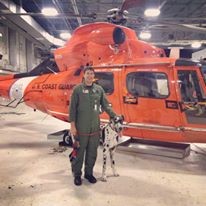
At 600 feet, the engine stopped, and we’re falling…. fast. Over 2000 feet per minute, which gives me a little less than 18 seconds to do something before we hit the ground. And we have no parachute.

Sitting through hundreds of hours of lectures, reading, studying and talking about theory and procedures, while a crucial foundation before this day, was no comparison to actually living in and experiencing that moment: when I completed my first helicopter autorotation during advanced flight training. My saving grace was that an experienced flight instructor sat next to me, ready to save us had I failed to act, or to correct the controls had I acted wrongly, coaching me as I landed us safely with only a few small bumps. I’m sure the outcome would have been much different without the luxury of having this mentor guide me during my first time through.

This is TI:GER.

It is not some theoretical mumbo jumbo that we may apply one day. Sure it feels like I’m standing in front of an open fire hose, being beaten with excessive information through a heavier course load, massive amounts of reading, many (but relevant, guest expert-led) lectures, discussions and lots of work (including patent filing, intellectual property freedom to operate, industry analysis, and currently working on funding, customer discovery, and a commercialization plan). It is challenging. But what makes this different… better… worth it, is that we are living it, experiencing it, testing it, as we work to try to actually commercialize a cutting edge technology and form a company.

I am humbled to be part of a brilliant team working to commercialize a new additive manufacturing technology (ahem… sorry Margi… “3D printing”) which “prints” lighter/stronger production-grade composites (carbon fiber, Kevlar, etc). Led by the Georgia Tech PhD who invented the technology, Chris Oberste, our “dream TI:GER team” was the first to form this year, taking in incredible talent with our Emory University JD’s Daniel Ledesma and Nathan North and my Scheller MBA counterpart Akshay Saxena. We’ve already made incredible strides towards our goal.

TI:GER is an entrepreneurial accelerator that thrusts you beyond the books into the action.

Just as the flight instructor was there during my initial helicopter flights to increase safety, as we go through TI:GER, we are not alone. We are surrounded by dedicated advisors and current field-expert business and legal mentors, hand selected to match their expertise with our technology. They are there guiding us, helping to prevent us from making catastrophic (or, at least, costly) mistakes, allowing us to learn the process through doing while having a safety net should we falter along the way.


This next year is going to be awesome. I’m all in.

Lewis Motion
TI:GER Class of 2017

Tuesday, January 19, 2016

Insights from Team NanoCliq...

I am Vibin with team NanoCliq. We are a second year Ti:GER team working in the immunotherapeutic space. My teammates are Rob Demont (PhD), Indra Datta (MBA), Bunny Sandefur (JD) and Nikki Leung (JD).  Our technology helps pharmaceutical companies reduce their preclinical testing time and shaves as much as 2-years off the drug discovery period. This translates to 2-years of additional patent protected revenue and for each blockbuster drugs that translates to at least $1 billion in additional revenue/year. We are a technology that serves the pharma world without getting caught in the muck of FDA approval. How cool is that!? Our market size in preclinical testing across all immunotherapeutics is estimated at $20 billion a year. Yes! We will turn into corporate leviathans, hell bent on world domination if things work out.


That’s us on the podium
Instead of boring y’all with further details of how cool the technology is, I thought I will give you a brief overview of what is ahead for us. We are on the cusp of getting this technology to market. One large pharmaceutical company initiated contact with us (name withheld for no reason other than to sound mysterious) and we are in discussions to get a first pilot going. This semester we worked on putting some structure to the business model and presenting it to the larger audience. We represented TI:GER at the Georgia Bio Innovation conference this November. For us, it was important to get the word out about NanoCliq and possibly find out at least two more partners to enter into a pilot project. 

For those who don’t know what GaBio Summit is, please see the links below: http://www.gabiosummit2015.com/


                                                                                              So what Next?
The full team in close up!
We have to iron out the details of our business model. The devil is unfortunately in the details. We have an idea of how we will make the revenue, what could the costs be and who are the partners required to get to market. That however will not be sufficient. We will have to structure the exact details, so that we can start negotiating for a deal with the pilot partners. This is going to be a lot of work, but we have an awesome team to get the things done. Before I wind up, a shout out to our awesome mentors MG. Finn, Richard DiMonda and Gary Busch.  Rich and MG went with us through every step of the process and we have a business model because of their help.  Also a big thank you to Bob McNally who sat with us and made GaBio Summit happen.


A final word on TI:GER:
It’s not possible to take something complex like an Immunotherapeutic technology to the market place without having a structure to frame the business. TI:GER is one of the most awesome programs to make this happen. TI:GER provides a solid dependable team, an extremely structured academic framework and super well connected and experienced network to make things happen. This program was the single most awesome experience in my entire educational experience till date. 


Monday, December 7, 2015

Semester Wrap Up

Hi everyone, it’s Maggie again.  Our TI:GER class of 2016 just finished our third semester and I thought I’d share some of the highlights.

One of the best things about this semester, in my opinion, was all the help we received in honing our pitch, clarifying our slide decks, and learning how to be better presenters all around.  For one class, we had a “Pitch Camp.”  Each team presented a three minute pitch and then was assigned a coach who worked with your team one-on-one to improve. 

The week after that we gave a practice 15 minute presentation to our business and law mentors in preparation for our final presentation in front of the TI:GER Advisory Board.  I’ve written about this in the past, but one of my favorite parts about TI:GER is the exposure you get to real world entrepreneurs and patent attorneys.

It’s been a great semester all around with some really good guest lecturers from the startup community and the angel investing and venture capital world.  Moving forward, some teams will continue to work on their TI:GER PhD project, some will choose to work with an ATDC start-up company, and some will choose to take a different class next semester.  A real positive for TI:GER which I hadn’t realized before now is that the program is very flexible and individualized to each student.

I look forward to seeing what next semester brings!

Wednesday, November 25, 2015

A Look Back at Team Formation

(Left: Akshay Ravi; Right: Ajaay Ravi)
On a warm Monday evening in August, I and my brother Ajaay were rushing to our TI:GER class. We were hardly a week into the MBA program at Scheller and were just getting to know our classmates. We entered our TI:GER class discussing how we had to network with a new set of classmates all over again. It was a little intimidating at first talking with all the PhD and JD students with the idea of forming teams to potentially start a company.  Slowly and steadily, we got an opportunity to talk to everyone and get to know one another.

One day during a casual hallway conversation at the TI:GER lab, Margi was asking us about the team formation was coming along and told us in a lighter vein – “I hope the brothers don’t end up together on the same team.” Ajaay told her that we had been consciously avoiding doing so from day 1 at Scheller and were confident that it would be the same for TI:GER as well.

Having grown up together and shared a room for 20 years, we knew each other very well to the extent where we could accurately predict what the other is thinking. Hence we thought in order to expand our repertoire we need to team up with a different set of people as that would benefit both of us going forward. Putting aside all other factors, we just started to network with all our classmates in the hope of becoming friends. We felt that there was no point in forming a team and a company if we cannot gel together as friends in the first place. After TI:GER class one Monday we were talking to one of the JD students, Lorrin Stone, who had a similar mindset as ours. We ended up having a long chat outside the GaTech hotel parking garage and felt very comfortable interacting outside class.

As time progressed and we got closer to the deadline to form our teams, one of the teams had already formed in our class and panic struck. We sat down and began to critically evaluate the projects we were interested in and found out that both of us had listed a particular project as our first choice given how well it aligned with our backgrounds. So contrary to what we were trying very hard to avoid, we eventually ended up in the same team. Our PhD teammate Matt had already decided on a JD student Forrest and we needed one more teammate. We recommended Lorrin’s name and our Team Cool was formed. We connected very quickly as a team and almost every conversation we had involved cars, engines, guns, thermal interface materials, assignments, jokes, basketball and food. And a few ideas every now and then about commercializing the technology as well.

For us, it was an amazing experience interacting with Lorrin and Forrest as both of us were Electrical Engineers and now MBA students. We found out that Lorrin had a Finance background and Forrest already had experience running his own company and both of our lawyers understood business better than us. The avenues to learn were plenty and the chances of going wrong very marginal, given the experience in our team. Each of us brought different perspectives to the table and it was interesting to find out how well we complemented each other. All of us understood the nuances of Matt’s technology and started contributing to the brainstorming sessions fairly quickly. Yes, being lawyers Lorrin and Forrest do articulate a lot better. The other wonderful aspect of our team is the openness. Everybody is open to suggestion, bring about ideas to do things differently and debate potential solutions constructively. Matt is also very patient in explaining super scientific concepts that goes way above our heads. He deconstructs concepts into simple language so that it is easy for all of us to understand.

We also set up a regular time to meet every week and make it a point to always meet at different places across the school / city. This way we get to soak in different sights, enjoy different types of cuisines, and have refreshing conversations in new surroundings.

Until now, we have never felt that we are an interdisciplinary or multicultural team. We always think that we are a bunch of awesome people doing something cool. One important thing you learn apart from commercialization in TI:GER is friendship. This is definitely the start of a wonderful relationship for us going forward!

Monday, November 16, 2015

The Engineering Ph.D. That Says: What’s In A Pitch?


Explaining engineering research to a layman is a lot like using Auto-Tune. Yes I said Auto-Tune! The same thing that T-Pain, Kanye West, and secretly every pop band in the world uses to put their voice at the correct pitch. It is a great piece of software that makes anyone a great singer.

Now imagine someone puts headphones on you, and asks you to sing into a microphone Journey’s hit-single “Don’t Stop Believing” at karaoke. In the headphones all that you hear is your beautifully Auto-Tune-corrected voice flowing on top of the music. You are auto-magically singing on key and every single note hits perfectly.

Guess what everyone next to you hears? Pure unadulterated: awfulness.

You see, as Ph.D. students, we have to write a lot of papers. Unknowingly, writing technical papers all the time can condition us to speak like we write. I find this is a major flaw that many of us Ph.D. students make when transitioning to the marketplace. When we speak about our work, our logic and technical expertise is secretly auto-correcting our speech so that our logical understanding is satisfied to be in perfect “technical-pitch.” But the market doesn’t care about technical correctness!

Reflecting over my first year in TI:GER, most of my team’s meetings discussed more about what the technology is, rather than what to do with it.  Working together and getting feedback from my wife (Praise the LORD I live with a GT MBA’15!), helped tremendously to work out what to say and how to say it. After a year, we finally realized how to communicate what it is our technology does, and why it is awesome. It took many iterations of speaking about the technology in a sense that everyone can grasp, and it paid off with a win at the TI:GER Alumni Student Pitch Competition this past Fall 2015 (thank you TI:GERs for your vote!).  

My advice to other engineers exposing themselves to the marketplace is to change the key you sing in. Get out of paper mode, and talk to non-technical professionals about what your research is. Start to develop your ear to communicate effectively to the marketplace, and you too could deliver the perfect pitch.

Billy Kihei, All glory to God for the success you just read about!

You can track Billy’s Thesis Writing process at: http://www.raddmusic.com/events