Tuesday, January 17, 2017

TI:GER: Everywhere You Want to Be

Hi, my name is Declan and I’m a first-year MBA working on a TI:GER project to commercialize a robot for testing autonomous-driving equipment and algorithms. 

There have been many benefits from the program, but at a recent career fair, I found one I hadn’t realized before. I had been waiting in line quite a while to talk to a recruiter for one of the major car companies. We chit-chatted for a few minutes and then I mentioned my TI:GER experience—“I’m also working with a multi-disciplinary team to commercialize research related to autonomous driving.” His jaw dropped. TI:GER skills are in demand by more companies than just start-ups.

The first thing people notice about the TI:GER program is how great the experience is for learning to start your own business, but there is much more to it. This recruiter was intrigued because he was looking for new hires that have an entrepreneurial mindset. The skills that we learn are valuable everywhere—not just in a startup. Large, small, new and old companies know that it’s not enough to keep doing the same things they’ve always done. They need employees that think big and are willing to take risks. If a company doesn’t keep coming up with novel ideas in their market, then a competitor will. This is the type of work that a TI:GER graduate can do.


Therefore, corporate intrapreneurship is another path that is opened via the TI:GER program. You could be an employee of a Fortune 500 company innovating around a problem that doesn’t even exist yet, or you could be a founder of an internal startup (think Waymo within Alphabet). The possibilities are endless; the only limits are ones you put on yourself.

Tuesday, November 22, 2016

My First Semester TI:GER Experience

Hi, my name is Anna and I am a first-year Georgia Tech MBA student.  I am wrapping up the first semester of the TI:GER program and I wanted to share my experience thus far.  One of the best parts about TI:GER is getting to work on a cross-functional team that consists of one Georgia Tech PhD student, two Emory law students and two Georgia Tech MBA students.  Our team project for the duration of the TI:GER program is based off each PhD student’s current research.  I think that the PhD students are working on some really interesting projects and for me as an MBA student, the TI:GER program is a great way to apply business school concepts to a real world project.  It’s definitely an interesting experience to meet your classmates, learn about their backgrounds and then scramble to form a team that you will work with for the next year and a half!

My team consists of myself, Rob Mannino, Prateek Mittal, Creighton McMurray and Alek Siliunas.  Rob Mannino is a biomedical engineering PhD student at Georgia Tech.  Prateek is the other Georgia Tech MBA student on my team and Creighton and Alex are the Emory law students.  My group is working on an app that can monitor anemia using smartphone images.  Our team brings together many diverse backgrounds that all complement each other on this project.  I came to business school with a finance background, Rob is our subject matter expert, Prateek has a computer science background, Creighton brings law expertise via a previous background with bioethics and medical humanities and Alek comes from a family of successful inventors.  It’s this rich blending of backgrounds that provide for unique and thoughtful team discussions.  I’ve really enjoyed pausing to reflect on my team member’s thoughts as they consider a business problem from a different angle. 

I couldn’t end this post without mentioning the wonderful TI:GER lab that is available to all TI:GER students.  The lab has lots of workstations and conference rooms.  Also, there are computers, printers, lockers and a break room.  Our team uses the lab for team meetings and also as a breakout space.  I use the TI:GER lab as my home base to study and catch up on my other classes.  Most graduate students will agree that having a dedicated work space is an extremely valuable amenity and only another reason why I’m glad to be a part of the program.  At the end of our first semester, our team has only started our journey towards commercializing our TI:GER PhD project but I’m looking forward to continuing the adventure! 

Anna McDermott
TI:GER Class of 2018
My TI:GER Team at Georgia Tech Ropes Course 
From left: Prateek Mittal, Rob Mannino, Anna McDermott, Creighton McMurray (not pictured: Alek Siliunas)

Thursday, September 8, 2016

Me and Civil Engineering: New to TI:GER

A funny series of events landed me as the first civil engineering PhD student in the TI:GER program, and I could not be happier with the way things have turned out. My name is Chloe Johansen, and I am a first year TI:GER PhD student studying the ways different civil infrastructure systems depend on each other and how to make these systems more resilient.


I believe imposter syndrome is prevalent among female engineers.. In short, it is a feeling that you somehow lucked into getting where you are. As a freshman, the fact that I wouldn’t be able to handle being an engineer was embedded in me, even though it is what I wanted to be.  I cycled through three different majors my first three years of college trying to figure out what else I could be good at and enjoy. I started as a pre-physical therapy major, realized that was not for me, changed to biology, realized that also was not for me, and tried out environmental science. Nope. Then finally, in my third year, I admitted to myself that I could handle an engineering course load after getting a rare A in physics. Also, I admitted that I would do it in two and a half years since I didn’t want to be an undergrad forever. At the end of five years, I realized my passion for research in a field that I am passionate about and decided a PhD was for me.

Through choosing and refining a research topic with my advisor, Dr. Iris Tien, I have discovered the potential for impact that much academic research can have on our built environment. I have also discovered the struggle for many academics to translate their research into terms that stakeholders and decision makers understand and will take action on. Last year, I read an article discussing both the lack of and great need for innovation in our infrastructure systems. I realized that my research had the potential to address this issue and started to look into the TI:GER program. I went to an info session and talked with Margi and Marie after. I learned that they had never had a civil engineering student in the program and was even more driven to apply and push for innovation in my field.


I started the TI:GER program a few weeks ago, and can no longer convince myself that luck has gotten me to where I am today. It is through hard work and great mentors that I have earned a spot in the TI:GER program at Georgia Tech. I look forward to the opportunity of gaining more mentors and incorporating much needed innovation into a field that I care about!

Chloe Johansen
TI:GER Class of 2018

Tuesday, February 16, 2016

Why TI:GER?

I am an attorney enrolled in the TI:GER program while pursing my MBA, so this is my second graduate student experience. My decision to pursue an MBA was based largely on my desire to work on business problems as opposed to problems that are strictly legal in nature. Having been through the law school experience, I know that practical experience is a key influence on future career choices.

During law school I took part in mock trials and law clinics where I represented individual clients in real court proceedings. I then went on to clerk for a trial judge, work as a prosecutor and eventually started my own law practice. My experiential learning had a strong influence on my confidence in interviews for some of these positions, as well as the strength of the cover letters that I wrote and how quickly I could adapt to the new role. In sum, my experience with trial work during law school lead to my desire and ability to pursue a career in trial practice.

While reflecting on that experience, I started my MBA journey with a desire to gain practical experience in advising companies on business strategies for commercializing new technology. In my law practice, I had experience advising a key client, a startup research and development company, on contract negotiation issues. As I now aspire to step into the new role of strategic business advisor, TI:GER has been a tremendous opportunity to learn how to apply essential consulting skills, such as how to analyze the market for a product as well as how to assess the commercial viability of a particular technology.

In TI:GER, I am also exposed to the team dynamic that exists in small startups and many project-based work environments. My team is composed of law students, MBA students and one PHD student. Although our primary roles are based largely on individual areas of academic study, we are all exposed to the variety of issues involved in commercializing technology, such as intellectual property protection, market analysis and customer discovery.

I chose TI:GER based on the expectation that its experiential learning format would be a huge influence on my career path after the MBA program. Being in TI:GER has already provided key experiences that have helped me distinguish my skill set during job interviews.  I am passionate about the program, the technology and the team, and consider my decision to apply to TI:GER one of the best career decisions that I’ve ever made. I look forward to applying my TI:GER experience in my new career.

Jermaine Fanfair
TI:GER Class of 2017

Thursday, January 28, 2016

All In


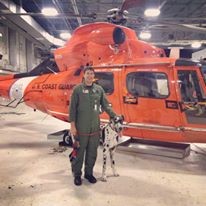
At 600 feet, the engine stopped, and we’re falling…. fast. Over 2000 feet per minute, which gives me a little less than 18 seconds to do something before we hit the ground. And we have no parachute.

Sitting through hundreds of hours of lectures, reading, studying and talking about theory and procedures, while a crucial foundation before this day, was no comparison to actually living in and experiencing that moment: when I completed my first helicopter autorotation during advanced flight training. My saving grace was that an experienced flight instructor sat next to me, ready to save us had I failed to act, or to correct the controls had I acted wrongly, coaching me as I landed us safely with only a few small bumps. I’m sure the outcome would have been much different without the luxury of having this mentor guide me during my first time through.

This is TI:GER.

It is not some theoretical mumbo jumbo that we may apply one day. Sure it feels like I’m standing in front of an open fire hose, being beaten with excessive information through a heavier course load, massive amounts of reading, many (but relevant, guest expert-led) lectures, discussions and lots of work (including patent filing, intellectual property freedom to operate, industry analysis, and currently working on funding, customer discovery, and a commercialization plan). It is challenging. But what makes this different… better… worth it, is that we are living it, experiencing it, testing it, as we work to try to actually commercialize a cutting edge technology and form a company.

I am humbled to be part of a brilliant team working to commercialize a new additive manufacturing technology (ahem… sorry Margi… “3D printing”) which “prints” lighter/stronger production-grade composites (carbon fiber, Kevlar, etc). Led by the Georgia Tech PhD who invented the technology, Chris Oberste, our “dream TI:GER team” was the first to form this year, taking in incredible talent with our Emory University JD’s Daniel Ledesma and Nathan North and my Scheller MBA counterpart Akshay Saxena. We’ve already made incredible strides towards our goal.

TI:GER is an entrepreneurial accelerator that thrusts you beyond the books into the action.

Just as the flight instructor was there during my initial helicopter flights to increase safety, as we go through TI:GER, we are not alone. We are surrounded by dedicated advisors and current field-expert business and legal mentors, hand selected to match their expertise with our technology. They are there guiding us, helping to prevent us from making catastrophic (or, at least, costly) mistakes, allowing us to learn the process through doing while having a safety net should we falter along the way.


This next year is going to be awesome. I’m all in.

Lewis Motion
TI:GER Class of 2017

Tuesday, January 19, 2016

Insights from Team NanoCliq...

I am Vibin with team NanoCliq. We are a second year Ti:GER team working in the immunotherapeutic space. My teammates are Rob Demont (PhD), Indra Datta (MBA), Bunny Sandefur (JD) and Nikki Leung (JD).  Our technology helps pharmaceutical companies reduce their preclinical testing time and shaves as much as 2-years off the drug discovery period. This translates to 2-years of additional patent protected revenue and for each blockbuster drugs that translates to at least $1 billion in additional revenue/year. We are a technology that serves the pharma world without getting caught in the muck of FDA approval. How cool is that!? Our market size in preclinical testing across all immunotherapeutics is estimated at $20 billion a year. Yes! We will turn into corporate leviathans, hell bent on world domination if things work out.


That’s us on the podium
Instead of boring y’all with further details of how cool the technology is, I thought I will give you a brief overview of what is ahead for us. We are on the cusp of getting this technology to market. One large pharmaceutical company initiated contact with us (name withheld for no reason other than to sound mysterious) and we are in discussions to get a first pilot going. This semester we worked on putting some structure to the business model and presenting it to the larger audience. We represented TI:GER at the Georgia Bio Innovation conference this November. For us, it was important to get the word out about NanoCliq and possibly find out at least two more partners to enter into a pilot project. 

For those who don’t know what GaBio Summit is, please see the links below: http://www.gabiosummit2015.com/


                                                                                              So what Next?
The full team in close up!
We have to iron out the details of our business model. The devil is unfortunately in the details. We have an idea of how we will make the revenue, what could the costs be and who are the partners required to get to market. That however will not be sufficient. We will have to structure the exact details, so that we can start negotiating for a deal with the pilot partners. This is going to be a lot of work, but we have an awesome team to get the things done. Before I wind up, a shout out to our awesome mentors MG. Finn, Richard DiMonda and Gary Busch.  Rich and MG went with us through every step of the process and we have a business model because of their help.  Also a big thank you to Bob McNally who sat with us and made GaBio Summit happen.


A final word on TI:GER:
It’s not possible to take something complex like an Immunotherapeutic technology to the market place without having a structure to frame the business. TI:GER is one of the most awesome programs to make this happen. TI:GER provides a solid dependable team, an extremely structured academic framework and super well connected and experienced network to make things happen. This program was the single most awesome experience in my entire educational experience till date. 


Monday, December 7, 2015

Semester Wrap Up

Hi everyone, it’s Maggie again.  Our TI:GER class of 2016 just finished our third semester and I thought I’d share some of the highlights.

One of the best things about this semester, in my opinion, was all the help we received in honing our pitch, clarifying our slide decks, and learning how to be better presenters all around.  For one class, we had a “Pitch Camp.”  Each team presented a three minute pitch and then was assigned a coach who worked with your team one-on-one to improve. 

The week after that we gave a practice 15 minute presentation to our business and law mentors in preparation for our final presentation in front of the TI:GER Advisory Board.  I’ve written about this in the past, but one of my favorite parts about TI:GER is the exposure you get to real world entrepreneurs and patent attorneys.

It’s been a great semester all around with some really good guest lecturers from the startup community and the angel investing and venture capital world.  Moving forward, some teams will continue to work on their TI:GER PhD project, some will choose to work with an ATDC start-up company, and some will choose to take a different class next semester.  A real positive for TI:GER which I hadn’t realized before now is that the program is very flexible and individualized to each student.

I look forward to seeing what next semester brings!

Wednesday, November 25, 2015

A Look Back at Team Formation

(Left: Akshay Ravi; Right: Ajaay Ravi)
On a warm Monday evening in August, I and my brother Ajaay were rushing to our TI:GER class. We were hardly a week into the MBA program at Scheller and were just getting to know our classmates. We entered our TI:GER class discussing how we had to network with a new set of classmates all over again. It was a little intimidating at first talking with all the PhD and JD students with the idea of forming teams to potentially start a company.  Slowly and steadily, we got an opportunity to talk to everyone and get to know one another.

One day during a casual hallway conversation at the TI:GER lab, Margi was asking us about the team formation was coming along and told us in a lighter vein – “I hope the brothers don’t end up together on the same team.” Ajaay told her that we had been consciously avoiding doing so from day 1 at Scheller and were confident that it would be the same for TI:GER as well.

Having grown up together and shared a room for 20 years, we knew each other very well to the extent where we could accurately predict what the other is thinking. Hence we thought in order to expand our repertoire we need to team up with a different set of people as that would benefit both of us going forward. Putting aside all other factors, we just started to network with all our classmates in the hope of becoming friends. We felt that there was no point in forming a team and a company if we cannot gel together as friends in the first place. After TI:GER class one Monday we were talking to one of the JD students, Lorrin Stone, who had a similar mindset as ours. We ended up having a long chat outside the GaTech hotel parking garage and felt very comfortable interacting outside class.

As time progressed and we got closer to the deadline to form our teams, one of the teams had already formed in our class and panic struck. We sat down and began to critically evaluate the projects we were interested in and found out that both of us had listed a particular project as our first choice given how well it aligned with our backgrounds. So contrary to what we were trying very hard to avoid, we eventually ended up in the same team. Our PhD teammate Matt had already decided on a JD student Forrest and we needed one more teammate. We recommended Lorrin’s name and our Team Cool was formed. We connected very quickly as a team and almost every conversation we had involved cars, engines, guns, thermal interface materials, assignments, jokes, basketball and food. And a few ideas every now and then about commercializing the technology as well.

For us, it was an amazing experience interacting with Lorrin and Forrest as both of us were Electrical Engineers and now MBA students. We found out that Lorrin had a Finance background and Forrest already had experience running his own company and both of our lawyers understood business better than us. The avenues to learn were plenty and the chances of going wrong very marginal, given the experience in our team. Each of us brought different perspectives to the table and it was interesting to find out how well we complemented each other. All of us understood the nuances of Matt’s technology and started contributing to the brainstorming sessions fairly quickly. Yes, being lawyers Lorrin and Forrest do articulate a lot better. The other wonderful aspect of our team is the openness. Everybody is open to suggestion, bring about ideas to do things differently and debate potential solutions constructively. Matt is also very patient in explaining super scientific concepts that goes way above our heads. He deconstructs concepts into simple language so that it is easy for all of us to understand.

We also set up a regular time to meet every week and make it a point to always meet at different places across the school / city. This way we get to soak in different sights, enjoy different types of cuisines, and have refreshing conversations in new surroundings.

Until now, we have never felt that we are an interdisciplinary or multicultural team. We always think that we are a bunch of awesome people doing something cool. One important thing you learn apart from commercialization in TI:GER is friendship. This is definitely the start of a wonderful relationship for us going forward!

Monday, November 16, 2015

The Engineering Ph.D. That Says: What’s In A Pitch?


Explaining engineering research to a layman is a lot like using Auto-Tune. Yes I said Auto-Tune! The same thing that T-Pain, Kanye West, and secretly every pop band in the world uses to put their voice at the correct pitch. It is a great piece of software that makes anyone a great singer.

Now imagine someone puts headphones on you, and asks you to sing into a microphone Journey’s hit-single “Don’t Stop Believing” at karaoke. In the headphones all that you hear is your beautifully Auto-Tune-corrected voice flowing on top of the music. You are auto-magically singing on key and every single note hits perfectly.

Guess what everyone next to you hears? Pure unadulterated: awfulness.

You see, as Ph.D. students, we have to write a lot of papers. Unknowingly, writing technical papers all the time can condition us to speak like we write. I find this is a major flaw that many of us Ph.D. students make when transitioning to the marketplace. When we speak about our work, our logic and technical expertise is secretly auto-correcting our speech so that our logical understanding is satisfied to be in perfect “technical-pitch.” But the market doesn’t care about technical correctness!

Reflecting over my first year in TI:GER, most of my team’s meetings discussed more about what the technology is, rather than what to do with it.  Working together and getting feedback from my wife (Praise the LORD I live with a GT MBA’15!), helped tremendously to work out what to say and how to say it. After a year, we finally realized how to communicate what it is our technology does, and why it is awesome. It took many iterations of speaking about the technology in a sense that everyone can grasp, and it paid off with a win at the TI:GER Alumni Student Pitch Competition this past Fall 2015 (thank you TI:GERs for your vote!).  

My advice to other engineers exposing themselves to the marketplace is to change the key you sing in. Get out of paper mode, and talk to non-technical professionals about what your research is. Start to develop your ear to communicate effectively to the marketplace, and you too could deliver the perfect pitch.

Billy Kihei, All glory to God for the success you just read about!

You can track Billy’s Thesis Writing process at: http://www.raddmusic.com/events

Friday, April 3, 2015

The Elusive Product Market Fit

Hi everyone, I'm Brett, a first year TI:GER MBA student.  My group PaniPure is working on a new method of desalination.  Below are some thoughts on how to find your target market…


If you were to draw the process of starting with a technological advance and turning it into something actually useful, it would appear as a 1st grade scribble - ignoring the certainty of lines constraining a form.

And so it went as my PaniPure TI:GER group sought a clear product market fit. The technology itself is a water treatment method which strips salt and other chemicals from water, potentially pulling salt and other particles from an impure medium. What was immediately evident was the apparent relevance of the technology - water security is a constant ally of journalists in search of a topic.

The group began in a similar vein, seeking to apply the tech to poverty stricken regions of the world to provide clean drinking water. This was promising at first, but proved a dead end after limitations of the technology were seen in the application. The technology could not remove bacteria from water - an essential characteristic of safe drinking water.

The group next turned to a more prosaic need - in home water softening. This appeared promising initially, as the equipment to power such systems was thought to be highly complex and expensive. This suspicion was proven incorrect rapidly with simple online searches that revealed the superior cost structure and simplicity of existing approaches.

These two avenues helped to define the space within which the PaniPure technology might be of use - where significant infrastructure already exists and where removing impurities, but not bacteria, are both critical. This led my group to consider the complex and massive agricultural irrigation industry.

This was a good bet - water prices were known to be high due to limited supply. The group had little experience with the market and first worked on understanding how farms currently obtained irrigation water. This began by calling the agricultural state extension services - a government agency in constant contact with farmers and their needs. This connection led to many more and helped paint a picture of the irrigation water industry. With this knowledge, those responsible for procuring water were contacted next, primarily farms and water management agencies. When these contacts began sending the team data and test water, it was clear that PaniPure had found a connection with end users.

Wednesday, April 1, 2015

The TI:GER Network

Hi guys, I'm Maggie.  I'm a first year Georgia Tech MBA candidate and this is my second semester with the TI:GER program.  My group is working on a medical device that can treat diabetes.  Since one of the best parts of the TI:GER program is its large network, I thought I'd tell you a little bit about our mentors...

Thanks for reading!


Regarding our mentors, I’ll quote the indubitably wise Tony the Tiger here: they’re grrrrrrrrrrreat!

Let me back up for a moment.  For those of you who don’t know, each TI:GER team gets assigned a law mentor and a business mentor.  Below I try to give a highlight reel of our meetings.

Our law mentor is a former TI:GER Emory Law alum – he graduated from the program four years ago.  In our first meeting, he had all the documents we’d sent over bounded and tabbed.  He’d also brought another member of his firm to help out.  They blew me away – so energetic, so willing to help, so knowledgeable.  Both have been a huge asset to our team as we struggle to understand the current patent landscape.  Last week our group went to one of the mentor’s home for pizza and we got to know each other outside of TI:GER.

Our business mentor has been with the TI:GER program for about 5 years.  A former TI:GER student now works at his start-up company.  Our team had been struggling with this one issue about why competitors enter a specific market, and our mentor was able to give us an answer within 2 minutes of starting our meeting.  I also really liked his comment “I’d be happy to open my network to you.”  We need to speak with endocrinologists (docs that treat people with diabetes) and our mentor immediately knew who we could get in touch with to get an introduction to those doctors.  That kind of knowledge and networking is truly invaluable to our team.

The TI:GER mentors far exceed my expectations.  I’m so impressed that these successful professionals really care about our project and want to help any way they can.  So far this has been one of my favorite aspects of the TI:GER program.

Thursday, March 26, 2015

Get Out of the Building: Customer Discovery

Hi, I'm Jonathan.  I'm a first year TI:GER MBA student and my team is working on a new way to sort stem cells.  I thought I'd tell you a little bit about our customer discovery process...

Everyone wants our technology! Our technology is perfect! Show me the money!

Those are the mantras that every entrepreneur wants to believe. The blood, sweat, and tears that went into developing a technology should justify its widespread appeal and commercializability. Sometimes this is the case, but usually not. Kevin Costner certainly led us astray when he uttered those now famous words “build it and they will come.”

If I have learned anything from being in the TI:GER program, it’s the fact that you have to get out of the building and talk to people. The other option is to create beautiful business plans, estimate market growth, and decide which island you will buying. The problem with that approach is that as soon as you show your plan to a real entrepreneur or potential investor, the first question you will get is “how do you know?” You will not be able to respond in a convincing manner. Customer interviews are essential to understanding your technology’s appeal to consumers (not guaranteed) and the degree to which it addresses a pain point (may be not at all). The goal is to gather as much data as possible from the people who will buy your product or service to justify moving forward – affording you the insight you will need to tweak your product, pivot, or go back to the drawing board.

This process is tough. It takes a dedicated team to ask the right questions and deal with answers that may run contrary to original expectations. There will be ups and downs, but in the end you will be grateful for the experience because you will identify a path forward (even if its not the one you set out on originally). Trust me – my TI:GER team is learning this in real time.

The CEO at my previous company was fond of Colin Powell and often shared the following quotation with clients (from his book It Worked for Me: In Life and Leadership):

"If it ain't broke, don't fix it" is the slogan of the complacent, the arrogant or the scared. It's an excuse for inaction, a call to non-arms. It's a mind-set that assumes (or hopes) that today's realities will continue tomorrow in a tidy, linear and predictable fashion. Pure fantasy. In this sort of culture, you won't find people who pro-actively take steps to solve problems as they emerge. Here's a little tip: don't invest in these companies.”


If you don’t seek out new information from customers you will become complacent and severely limit your market upside. Talk to people, get their insights, and solve the problems that customers want solved. Don’t take my word for it, listen to the general.

Wednesday, March 25, 2015

Hello everyone,


We’ve given TI:GER Tales a new twist.  Instead of a single student’s perspective, the blog will now incorporate thoughts from students working on a variety of teams.  We hope you find the posts helpful and gain some helpful insights into what it’s like to be in the TI:GER program.  Enjoy!

Tuesday, May 6, 2014

TI:GER Program wrap up

Well, after two years of preparing for graduation, I was caught by surprise when it actually happened. Now that the festivities have ended (and my family has returned home), I've been able to reflect on my time in the TI:GER program. 

Graduating is bittersweet. These past two years have been a tremendous gift and have allowed me to focus on my personal and professional development in a way that few adults are given the opportunity to do. The saying that youth is wasted on the young might have some truth to it. 

Through the TI:GER program I've had some amazing experiences, networked with some incredible men and women in the Atlanta start-up community, and gained a great group of friends. Additionally, I've learned how to work better in interdisciplinary teams, how to deal with uncertainty, and how to fail fast. This experience has certainly formed the cornerstone of my MBA experience and I can't imagine being as prepared to return to the workforce as I am without it. 

Before I turn the blog back to Margi and next years students, I wanted to leave you all with my two greatest lessons from this semester, and I'll use my recent Ben Franklin readings to frame them. 

1) "An ounce of prevention is worth a pound of cure." This semester, more so than my previous three, my team was able to effectively divide work but still form a cohesive report at the end of the project. I attribute this not only to my great teammates (shout out!) but also to our upfront planning. Previously our divide and conqueror approach would come early in the process. We would go out independently, do our research, then bring our big pile together and try to craft a cohesive document from it. This semester we moved the planning and outlining stage to before the research stage. Essentially our team would meet, determine what information (specifically) we needed to proceed, then break and look for it independently. This made the end of the semester paper writing and compiling much smoother and really helped ease the time burden during a stressful finals week. 

2) "Think of three things: Whence you came, Where you are going, And to whom you must account." Forgive me for taking this quote out of context and fitting it into my "consulting is a skill" box but I think it works. This for me is the simplest expression of how to structure projects. Our sponsor was great at giving our team a wide array of projects and let us select which one we thought would be interesting and achievable given our education and work backgrounds. Once we had selected a project, our team would get clear client goals for the project, forming the foundation of our accountability. Lastly, our team would decide what our goal was (presentation, report, etc) and would make sure that all of our work was leading to that final product via the outlining process described above. By understanding our strengths, our goal, and our client, we were able to work quickly and effectively on this project. 


Once again, thanks for reading these posts. It's been a great experience for me and I've gotten a chance to talk with several of my readers via email or in person. I wish you all the best, wherever the road takes you! 


Monday, March 10, 2014

Marketing Claims Research

Happy March readers! Spring break is just around the corner and after a busy midterms season, I’m in need of some time off. This semester has been as hectic as my other three but I can see the finish line in sight. I can’t believe I’ve only got two months left at school, time has flow by!

So far this semester my TI:GER project has been focused on creating and ranking marketing claims for an biotechnology start-up. While there are claims that any medical device company needs to make in order to achieve FDA approval (efficacy and safety claims), there are also a wide array of other claims such a company would like to be able to make for marketing purposes.

Through our team’s research of competitor companies, we generated a list of claims that other medical devices in our field used to distinguish themselves from the current technology. This process involved going to competitors websites to find the claims and then reading the actual studies that were undertaken to back up these assertions. Most start-ups need to be lean and make sure their money is spent in the most effective way possible. By understanding not only what claims were being made in the market, but also the underlying testing required, our team was able to develop a cost vs. claim table.

After we generated our unranked list of claims and associated tests, we met with our client to determine next steps. Our client was pleased with our progress but needed our team to go the next step and rank our recommendations. These rankings were done in concert with the client as well as through competitor research. Our final deliverable was a set of the top 10 claims the start-up should test for in order to truly differentiate them in the market.


The next step is to vet these claims with current users of the technology. The next phase of our project (market entry analysis) will provide our team with ample time to speak to actual users and discover what would be the most important factors to them when considering changing technologies. Phase one of our project has been a blast and I’m excited about the next steps! 

Tuesday, January 21, 2014

Spring 2014 Kickoff!

As always, the fall semester flew by and now I'm starting my fourth and final semester in the TI:GER program. My time in the program has been marked by constantly evolving projects and the opportunity to continue to explore new markets and my current project is no exception. Our team last semester supported NextInput  and (hopefully) was able to provide them with some interesting research that will help drive their start-up forward. As always with consulting projects, the work depends on the needs of the companies, and NextInput did not have enough of the right kind of work this semester to have a TI:GER team on board. Luckily, I was able to switch projects this semester to work with a new medical device start-up! 

My new project offers an exciting change of pace and is my first foray into the exciting (and complicated) field of medical devices. Several of my fellow TI:GER students have been working with a variety of medical device projects over the past year and a half and I'm glad to finally get a chance to do some work in this field. With the added wrinkle of FDA approval and increasing legal regulations, this market should prove to be challenging but very rewarding to work in. 

I'm heading up the market entry plan aspects of the project. The start-up has several potential markets to enter first and selecting which market is critical to the widespread adoption of the technology. Some markets are more fragmented, some are more centralized. Some are large but broad, others are smaller and narrower in focus. Some have high barriers to entry, some are lower. 

Hopefully through our teams research, we will be able to guide our company towards the market that will allow quick penetration and return on their investment. We know the best way to go about this research will involve getting out of the building and start interviewing some key stakeholders within each potential market. I hope to use my past experiences in the program to make this last consulting project run smoothly and provide more actionable results!  

All in all, I'm very excited about my new team and our new project. I've already been exposed to several emerging markets through the TI:GER program and am glad to add another to that list.

Monday, December 2, 2013

International Opportunities

In addition to the myriad of opportunities TI:GER students have to get involved with the local start-up community, international offerings are a great way to broaden our view of the global market. Our program entered into an exciting partnership with Copenhagen Business School's BBIP program and participated in a week long exchange with 8 of their students. The program involved two teams (4 from Copenhagen and 2 TI:GER students each ) working to commercialize life sciences research. Our four TI:GER students flew to Denmark earlier in the semester to meet the rest of their teams and learn more about the science they would be working with.

After this initial week trip, the TI:GER students kept in touch with their Danish teammates and worked on developing business and commercialization plans remotely. Using video conferencing and collaborative software, they were able to continue their work despite geographic limitations.

In late November it was the TI:GER program's turn to play host as the eight Danish students came to Atlanta for a week to continue work on their business plans in person as well as learn about the local life sciences start-up community. They went on tours of nearby businesses, Georgia Tech laboratory facilities, and even made it out to a Hawks game to have some fun. All the while they were working diligently on their business plan presentations between tours and events. We even got some of them to join us at Mary Mac's to eat traditional southern fare - It was a hectic (but productive) week!

I was able to attend their presentations at the end of the week and was truly impressed by how much work these teams had accomplished during the semester, especially given the challenging distance. Both groups utilized the business model canvass and received feedback on their current go-to-market strategies. They received some good notes from the faculty in attendance and will be incorporating these suggestions into a written business plan in the coming weeks.

This partnership was a great way for TI:GER students to get international experience, work with an even more diverse team, and delve into a new product offering. New opportunities like this keep the TI:GER program fresh and the students engaged throughout their graduate school experiences.

Monday, October 28, 2013

Barriers to Entry

In last week's TI:GER class we were treated to a panel discussion from four local entrepreneurs. They shared their start-up experiences with the class and then took questions for an hour on a variety of topics from funding to the importance of patent protection. The aspect of the discussion that stood out the most to me was their approach to barriers to entry.

As the TI:GER program is based PhD's technologies, our projects are focused on products that are very novel and difficult to replicate. These high barriers to entry give our projects the ability to have intellectual property protection and create temporary monopolies around our technology.

The entrepreneurs offered a different perspective and suggested that founding a successful business was predicated more by finding a large market than finding a unique technology. They believed that our strategy was forcing our businesses into smaller market niches that were not always as profitable as larger markets, even adjusting for competition.

It reminded me of discussions our TI:GER team had last year when we were attempting to find a product to build using our technology. We were searching frantically for competitors and if we found that another group was first to market, we would either cross the idea off the list or, at the very least, strongly discourage the use of that product. We were intensely focused on finding a novel application to fit our new technology.

The panel was very informative and provided an interesting perspective. It is important to remember that there are two components to total potential customers for a start-up company: market share and market size. While it's easy to get focused on owning market share with a new technology, it needs to be balanced with understanding the potential size of the market. Barriers to entry, while important, is not the most important aspect to consider when launching a start-up.

Sunday, September 15, 2013

Year 2 TI:GER Blog Kickoff!

Finally the crazy start to the 2nd year of MBA school has calmed down and I've been able to write a catch-up post in the TI:GER Tales blog.

This summer I took off to Charlotte, NC for an internship at Duke Energy. While this may seem like an odd choice after a full year of Entrepreneurial studies, it was a great opportunity to see how the utilities industry worked at scale. I got to take a few trips to the test solar farm of Duke Energy where they perform extensive trials of various panels to make large scale purchasing decisions. My TI:GER project helped me get this internship and even more so helped me contribute from day one at the job.

Now for some bad news: our TI:GER project on next generation solar has come to an end. The current level of efficiency and the necessary research needed to make a commercially viable product combined to make our start-up nonviable in the marketplace. Our team really wanted to stay together and continue work but we would need a new project to fill our time.

Through the resources at the TI:GER office, our team was able to connect with an ATDC start-up named NextInput. They have offered our team a consulting project that will replace our PhD project, allow us to work on a more commercializable device, and continue working as a team throughout the fall semester.

I'll be writing more about our work with NextInput and various projects for class (business model canvass and our annual pitch-off competition vs UGA are sure to be highlights).

Thanks for bearing with me during my summer absence- look forward to more frequent updates now!


Tuesday, May 7, 2013

Business Plan Competition


Note! Our team has changed names to DynaGlass after some mentor feedback about our previous name. 

This year, I was asked to assist with the Georgia Tech Business Plan Competition (BPC). My TI:GER team decided not to enter due to our length of time to commercialization but I still wanted to be involved. Time keeping at the BPC was an amazing experience and hearing the wide variety of pitches and
judges’ comments helped mold our TI:GER team’s commercialization plan presentation. 
There were several traps that teams fell into most frequently:
  1. Many teams focused too much on their valuation. They provided detailed pro formas for 5-10 years out and explained all of their assumptions. This took a long time and in a time-constrained presentation format, this can be dangerous. The judges did not seem to take these pro formas very seriously because they were so far out and many of these teams had failed to make a single initial sale. What these slides did do was invite questions from the judges that were often difficult for the teams to answer which leads to trap number 2.
  2.  There were several attempts during Q&A for teams to answer questions about assumptions that were simple guesses. These assumptions were often difficult to find accurate numbers around and thus the teams would simply estimate or make up a number to make their financials work. When the judges would question these assumptions, teams would often just “make-up” a justification. This was fairly obvious to the judges and they would harp on that point until the team finally admitted they didn't have a reason. It’s always better to admit you don’t know the answer than to make one up.
  3. Teams often did a poor job explaining their technology in appropriate detail and language. Some teams used highly technical language and went into great detail on how, exactly, their product worked. In contrast, there were teams that glossed over their product and focused entirely on their business model. The judges wanted a detailed description that they could understand. Even if they do not understand all the science, it needs to be presented in a relatable way. Without a detailed description of how the product works, it makes the project seem less developed. The question then must be asked “why you?” if you do not have a specific way of solving the problem.

4. Pricing seemed to be fairly random and the judges wanted to see value based pricing. While value creation is often difficult to quantify, most other pricing models were perceived as being more “random”. The teams that were able to determine and demonstrate the value they were providing their customers generally performed better than those that offered vague “savings”.

These four key lessons provided great insight into what judges at business plan competitions are looking for and common mistakes teams make. Often teams seemed so involved in communicating the value of their idea, they forgot to communicate the value of the product that their company was selling. All companies are driven by sales and these judges seemed to take a simplistic view of start-ups. If you’re selling a product that offers greater value to the customer than it costs you to make it, you have a good chance of being successful. For DynaGlass, we need to really focus on the large value we are providing the customers and quantify that value as much as possible. That way our team will be able to overcome the relatively high price of our product. We also need to come up with justifications (written and sourced) for each of our assumptions and be quick to admit what we don’t know (but will find out) during our Q&A sessions.